Over the past two years, Europe’s fresh produce supply chains have faced significant disruptions due to climate change and economic challenges. These supply chains, which evolved over many decades under relatively stable conditions, are now being tested by increasing risks such as heat stress, drought, rising energy costs, and trade shifts. For fruits and vegetables, which are especially vulnerable due to their perishability, these disruptions present a serious threat to the consistent availability we have long taken for granted.
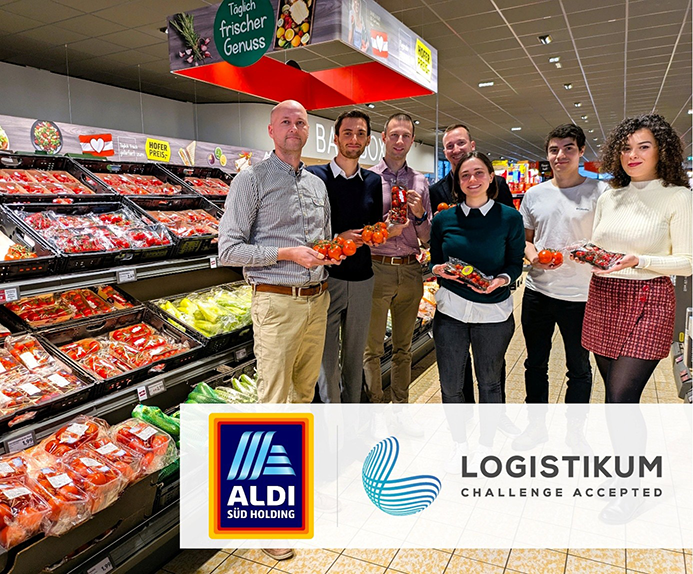
Project GROW was launched by the International Supply Chain Management Department at ALDI SÜD Holding and Logistikum at FH OÖ aiming to address these risks by analyzing the increasing volatility and uncertainty in fresh produce supply chains. Adopting a proactive, data-driven approach, the project seeks to quantify the impact of various factors on these supply chains. Its key objectives include:
· Identifying and operationalizing factors affecting produce availability, including climatic and economic variables like temperatures and energy costs.
· Developing a real-time rule-based monitoring system to track risks, incorporating sustainability indicators like greenhouse gas emissions.
· Creating a decision-support tool to help stakeholders across the supply chain mitigate disruptions and adopt more sustainable practices.
· Producing long-term projections of growing region capacities to guide strategic and sustainable planning.
The project focuses on the entire supply chain, from crop production to regional hubs, with the ultimate aim of ensuring stable and sustainable produce availability under changing conditions.
The GROW project team has already gathered data on growing regions and suppliers, laying the foundation for the upcoming phase, which will focus on data-driven analysis. By collaborating with farmers, suppliers, and retailers, the team aims to identify and quantify key factors affecting production. These insights will be integrated into a comprehensive data model and decision-support tool, enabling ALDI SÜD Holding to monitor risks, incorporate sustainability considerations, and respond to disruptions in real-time. The decision-support tool, combined with long-term projections, will help optimize procurement, inventory management, and strategic planning. Designed to be scalable, the project is intended to serve as a model for other fruits and vegetables and ultimately contribute to a more resilient, sustainable, and adaptable food supply system.
If you want to know more about the project, please feel free to reach out to Franz Aschauer (franz.aschauer@fh-steyr.at).